
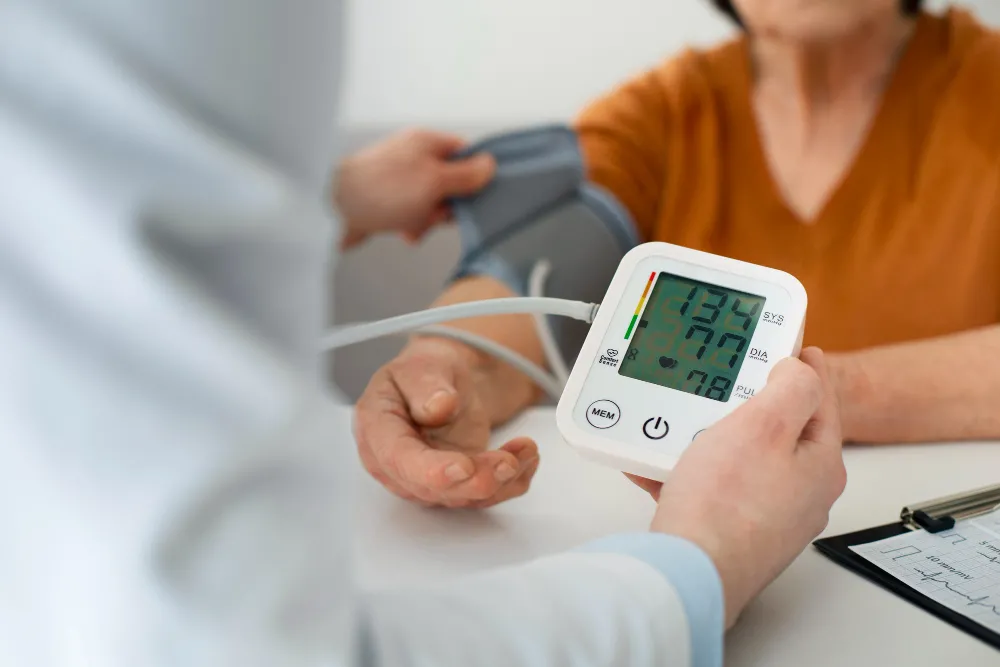
According to the Centers for Disease Control and Prevention, nearly half of American adults (48.1%, or 119.9 million people) have high blood pressure. Yet many don’t realize their readings fall outside the healthy range. One reason is that “normal” blood pressure isn’t the same for everyone.
Age and gender both play a role in determining healthy blood pressure levels. A reading that’s considered normal for someone in their 20s may raise concerns later in life, as blood vessels naturally stiffen with age. Hormonal differences between men and women also influence how blood pressure behaves over time.
This guide breaks down what is normal blood pressure by age and gender. We’ll cover specific ranges for men, women, and even children so you can understand exactly where you stand.
Different Blood Pressure Categories

Blood pressure represents the physical force your blood applies against your artery walls as it moves through your body. Doctors record this using two distinct metrics:
- Systolic pressure (the force during a heartbeat)
- Diastolic pressure (the force while the heart rests)
Here are the ranges of normal blood pressure and hypertension.
| Category | Systolic (mm Hg) | Diastolic (mm Hg) |
| Normal Blood Pressure | Less than 120 | Less than 80 |
| Elevated Blood Pressure | 120-129 | Less than 80 |
| Hypertension Stage 1 | 130-139 | 80-89 |
| Hypertension Stage 2 | 140 or higher | 90 or higher |
| Hypertension Crisis | 180 or higher | 120 or higher |
If your numbers consistently fall below the normal range, you might be dealing with hypotension. If you are dealing with dizziness or chronic fatigue, it is better to consult a low BP chart. It can help you determine whether your low readings are causing these symptoms.
Blood Pressure Chart for Age and Gender
Your cardiovascular system is not a fixed machine; it adapts as you grow. Since arteries tend to stiffen slightly as we get older, the normal reading also changes with age. In addition, gender also plays a role in different normal values due to hormonal differences. These hormones affect how blood vessels constrict and dilate, altering normal blood pressure values. Here are the normal blood pressure ranges for different age groups and genders.
1. Woman Normal Blood Pressure by Age
For many women, blood pressure remains relatively low and stable until the onset of menopause. Once estrogen levels begin to drop, the blood vessels lose some of their natural flexibility, often leading to a gradual rise in systolic pressure. Normal values for women aged between 18 and 59 are as follows:
| Age Group | Women’s Average BP |
| 18-39 years | 110/68 mm Hg |
| 40-59 years | 122/74 mm Hg |
If you are tracking your health, it is important to know what is normal blood pressure range for women in your specific age bracket. It allows for lifestyle adjustments before medication becomes necessary.
2. Normal Blood Pressure by Age for Men
Men generally exhibit higher blood pressure readings earlier in their adult lives than women do. This is often attributed to greater physical stress on the heart and differences in body composition.
| Age Group | Men’s Average BP |
| 18-39 years | 119/70 mm Hg |
| 40-59 years | 124/77 mm Hg |
While height is not the primary driver of these numbers, doctors sometimes use a blood pressure chart by age and height to determine if a man’s larger body frame influences his usual readings. For most, the blood pressure chart by age and gender data above serves as the most reliable benchmark.
3. Blood Pressure Chart for Children
Pediatric blood pressure is measured differently because children’s bodies are constantly growing. Instead of a single range like for adults, their healthy ranges are based on where they fall in their development cycle.
| Age Range | Systolic (mm Hg) | Diastolic (mm Hg) |
| 0–1 month | 60-90 mm Hg | 20-60 mm Hg |
| 1–12 months | 87-105 mm Hg | 53-66 mm Hg |
| 1–3 years | 95-105 mm Hg | 53-66 mm Hg |
| 3–5 years | 95-110 mm Hg | 56-70 mm Hg |
| 6–12 years | 97-112 mm Hg | 68-80 mm Hg |
| 13–18 years | 112-128 mm Hg | 66-80 mm Hg |
4. Blood Pressure Chart For The Elderly
As people enter their senior years, the vascular system becomes significantly less elastic. This is why the elderly age blood pressure chart often shows a wider acceptable range for the top number.
| Age | Target Range (mm Hg) |
| 61 and older | 95-145 / 70-90 mm Hg |
For seniors, maintaining a steady reading is more important than hitting a specific number. Regular checks are the best way to ensure these levels do not creep into the crisis zone.
How to Measure Blood Pressure at Home

An accurate blood pressure depends upon your body’s condition at the time of the test, as it affects the result. Small mistakes, such as talking during the test or having a full bladder, can raise your numbers. So make sure you follow these steps before measuring blood pressure at home:
- Sit quietly for five minutes before pressing the start button.
- Keep your feet flat on the floor and do not cross your ankles.
- Support your arm on a flat surface so the cuff stays at heart level.
- Take your measurement at the same time every day to see a real trend.
- Use a blood pressure by age calculator if you need help interpreting your daily averages.
Conclusion
Tracking your heart health involves more than reaching a single number. It is about understanding long-term patterns as your body changes with age. Regular monitoring helps you spot issues early and keep a clear record to share with a professional.
Small, proactive steps like adjusting your salt intake or increasing daily movement can significantly impact your cardiovascular future. If you find that your numbers are consistently outside the healthy range for your age, do not wait for symptoms to appear before seeking advice.
Simple Consult makes this medical assistance easier by offering $29 virtual visits. This online consultation helps you manage your health or get necessary prescription refills from the comfort of home.
FAQs
How do doctors decide if a blood pressure reading is normal?
They compare your current reading against historical data and your specific age-related category. They also look for symptoms such as headaches or vision changes that might indicate the pressure is too high for your body.
Does a healthy blood pressure change as you get older?
Due to the natural stiffening of the arteries, the systolic number (the top one) tends to rise as we age. This is why a 70-year-old and a 20-year-old have different average baselines.
What is a safe blood pressure range for adults?
Generally, staying between 90/60 mm Hg and 120/80 mm Hg is considered the safest zone for preventing heart disease and stroke.
At what point should blood pressure readings be a concern?
If your numbers are consistently 140/90 or higher, you are in Stage 2 Hypertension. Any reading that hits 180/120 requires immediate medical attention to avoid organ damage.












Add comment