

When you wake up with a stuffed nose and a heavy head, it makes for a rough start to the day. You might reach for a tissue and wonder whether the stuffy nose is due to seasonal pollen or a bacterial infection. Both conditions share so many traits that even healthy adults struggle to identify which one is causing the problem.
Understanding the difference is important for choosing the right treatment. If you mistake a sinus infection for allergies and rely only on allergy medication, you could delay proper recovery.
In this guide, we’ll break down the key differences between a sinus infection and allergies so you can choose the best path to feeling better.
Why Sinus Infections and Allergies Feel So Similar
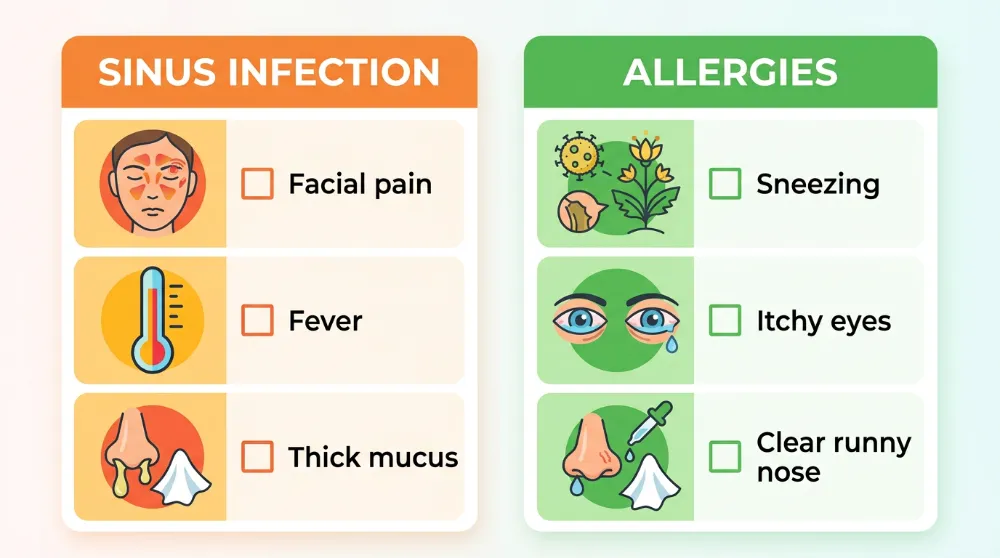
The reason most people confuse these two issues is simple. Both conditions happen in the exact same spot. These issues trigger inflammation in your nasal passages and the hollow cavities in your skull.
When these areas swell, they block the normal flow of mucus. This blockage leads to that familiar clogged sensation and pressure behind your eyes.
While the feeling is the same, the trigger is quite different. Allergies happen because your immune system overreacts to something harmless in the environment, like dust or pet hair.
A sinus infection occurs when viruses or bacteria grow inside those blocked, swollen areas. Because one often leads to the other, a comparison of sinus infection vs allergies is vital for your health.
Allergies and Their Usual Symptoms
Allergies usually follow a very specific pattern that depends on your environment. If you notice your nose starts running every time you step outside in the spring, you are likely dealing with an allergic reaction. It happens when your body releases histamines to fight off an invader.
Common signs of allergies include
- Sneezing several times in a row
- Clear and watery liquid draining from the nose
- Itchy, red, or watery eyes that feel irritated.
- A tickle or itch in the back of the throat or the roof of the mouth
- Symptoms that flare up quickly after touching a pet or going outside
Sinus Infections and Their Usual Symptoms
A sinus infection usually feels heavier than an allergy attack. While allergies make you feel irritated, an infection often makes you feel genuinely sick and run down. Often, a cold, sinus infection, and allergies can be hard to distinguish at first because they all start with some congestion.
However, typical symptoms of a sinus infection include
- Thick mucus that looks yellowish or greenish
- Pain or a heavy feeling in the cheeks, forehead, or around the eyes
- Aching in the upper teeth or jaw area
- A reduced ability to taste food or smell things
- Fatigue and a general sense of being worn out
- A mild fever that does not occur with basic allergies
Cold and Its Common Symptoms
A common cold often acts as the middle ground between an allergy and a sinus infection. Most adults experience a few colds every year, usually during the winter months or when the weather changes quickly. It is a viral infection that affects the upper respiratory tract and can leave you feeling weak for a few days.
Typical symptoms of a cold include:
- A mild sore throat that usually appears first
- Frequent sneezing and a stuffy or runny nose
- Watery mucus that may turn slightly thicker over time
- A mild cough that produces some phlegm
- Low-grade body aches or a slight headache
- Symptoms usually peak around day three or four
Distinguishing a cold vs sinus infection vs allergies is important because a cold is caused by a virus. Unlike allergies, a cold does not cause intense itching in the eyes or nose. Unlike a sinus infection, a cold usually resolves on its own within a week and rarely causes severe facial pain or a high fever.
Can Allergies Turn Into a Sinus Infection?
Untreated seasonal allergies can directly cause a sinus infection. When allergic reactions ignite your nasal pathways, the lining swells up and blocks the tiny drainage holes in your face. This blockage traps fluid inside your sinuses, turning them into a stagnant pool where bacteria or viruses multiply rapidly.
This allergy-sinus-infection connection usually starts with simple pollen or dust exposure. Your body releases histamines to fight the allergens, which causes inflammation. If that swelling does not go down within a few days, your natural sinus drainage stops completely. The resulting thick mucus meaning is simple: your body is failing to clear out waste, creating the perfect breeding ground for a secondary infection.
How to Tell Sinus Infection vs Allergies: Key Differences

If you are still unsure, use the breakdown below to check your current status.
1. Type of Nasal Discharge
The liquid that comes out of your nose is a major clue. With allergies, the mucus is almost always clear and liquid. If you have a sinus infection, the mucus becomes thick. This change happens because your white blood cells are actively fighting off an infection.
2. Itching and Sneezing
Itching is a major sign of an allergy. If your throat, nose, and eyes feel like they need to be scratched, you are likely reacting to an environmental trigger. Pure sinus infections rarely cause this itchy sensation. While you might sneeze once or twice with an infection, constant fits of sneezing are almost always a sign of an allergy.
3. Facial Pain or Pressure
While allergies can cause a mild headache, they rarely cause intense facial pain. A sinus infection creates significant pressure because the mucus is trapped in bone-lined cavities. Such an infection often leads to a sinus headache that feels like a heavy weight sitting on your cheeks or brow.
4. How Long Symptoms Last
Allergies stay as long as the allergen is present. If you stay indoors with an air filter, they might vanish in hours. An infection has a set timeline. Most experts suggest the 10-day rule. If your symptoms are still strong or getting worse after ten days, it is likely an infection.
Complications of Untreated Sinus Infection
Leaving a sinus infection untreated can turn into something far more serious if the infection spreads past your nasal bones. Your sinuses sit just beneath the brain and wrap around your eye sockets, so the trapped bacteria do not have far to travel. Once they push through those thin tissue boundaries, the problems can escalate quickly.
- Orbital Cellulitis: The infection breaks through the thin bone and reaches the eye socket. This causes severe swelling, redness, weakened vision, and in some cases total blindness.
- Meningitis: The bacteria move upward into the central nervous system. From there they cause life-threatening inflammation around the brain and spinal cord.
- Brain Abscess: A pocket of pus forms inside the brain tissue. This is a medical emergency that calls for neurological surgery.
- Blood Clots (Cavernous Sinus Thrombosis): The infection leads to a dangerous blood clot in the main veins behind your eyes. A clot in this area can go on to trigger a stroke.
How Treatment Options Differ for Both Conditions

The right care depends entirely on whether your symptoms are caused by allergies or a sinus infection. If you use the wrong medicine, you might dry out your nasal passages without fixing the actual problem. It is important to know whether you are dealing with a sinus infection or an allergy before you start a treatment plan.
1. Treatment for Allergies
The goal for allergy relief is to stop the immune system from overreacting. You want to calm the inflammation so your nose can breathe again. The following treatments may help:
Antihistamines: These pills or sprays block the histamines that cause sneezing and itching.
Decongestants: These help shrink the swollen tissue in your nose for a short time.
Nasal Rinses: A simple saltwater rinse can wash away pollen and dust from your nasal lining.
2. Treatment for Sinus Infections
The focus for a sinus infection is to clear out the bacteria and help the sinuses drain. If the infection is viral, you may just need time and rest.
Antibiotics: A doctor may prescribe antibiotics if they believe the infection is bacterial.
Pain Relievers: Simple over-the-counter pills like Tylenol can help with facial aches.
Nasal Rinses: These are also helpful here to keep the mucus thin and moving.
Steroid Sprays: A doctor might suggest a spray to lower the deep swelling inside the bone cavities.
Prevention Tips for Allergies and Sinus Infections
Breaking the cycle of sinus pain comes down to protecting your nasal lining from two things at once. You want to shield it from outside irritants, and you also want to keep it from drying out on the inside.
- Check Daily Pollen Counts: Try to stay indoors through the mid-morning hours, since that is when pollen levels usually peak. On high-count days, keep your bedroom windows shut so the pollen stays outside.
- Purify Your Air: Run a High-Efficiency Particulate Air (HEPA) filter in the rooms where you spend the most time. It traps dust, pet dander, and mold spores before you have a chance to breathe them in.
- Rinse After Being Outdoors: Take a shower and wash your hair as soon as you come back inside. This rinses away the tiny plant particles that cling to your skin and hair after time spent outside.
- Keep Mucus Thin: Aim for at least eight glasses of water a day, since staying hydrated keeps your mucus loose and easier to clear. It also helps to skip drying antihistamines unless your allergy symptoms are actually flaring up.
When to See a Doctor or ENT Specialist
You should schedule an assessment if your sinus pressure lasts more than ten days without any sign of improvement. If your symptoms start to get better but suddenly bounce back worse than before, a pattern doctors call “double sickening”, you need professional medical care.
Look out for red-flag symptoms that require immediate medical care. If you experience changes in your vision, severe swelling around one eye, a stiff neck, or a high fever that will not come down with medication, go to an urgent care clinic or emergency room immediately.
An Ear, Nose, and Throat (ENT) specialist can examine your nasal passages using a small camera to see if structural blockages are causing your frequent infections. For convenient, professional medical guidance and tailored prescription plans from home, you can access a Sinus Infection Treatment Online to start clearing your airways safely.
Conclusion
It is important to differentiate between a sinus infection vs cold vs allergies for a swift recovery. Allergies usually cause clear mucus and itchy eyes that fluctuate with the weather. A sinus infection causes thick yellow discharge, facial pain, and symptoms lasting longer than 10 days.
If your symptoms are severe or do not improve with home care, consult a medical professional. A doctor can check for bacterial growth and ensure you get the right medicine.
Proper management of your environment and early treatment can prevent a simple allergy from turning into a painful infection.
If you are seeking fast relief, Simple Consult offers professional online urgent care for sinus infection treatment. Our clinicians can also help you manage seasonal allergies from the comfort of your home. You can book a virtual visit today to get an accurate diagnosis and a personalized care plan to start feeling better.
Frequently Asked Questions
Can allergies turn into a sinus infection?
Allergies make the tissue inside your nose swell, and that swelling blocks your nasal passages and traps fluid. Once the mucus sits there with nowhere to drain, it becomes an easy place for bacteria or viruses to grow. That is how a secondary sinus infection often gets started.
How long does a sinus infection last?
Most viral sinus infections clear up on their own within 7 to 10 days. The picture changes if your symptoms hang around past the 10-day mark without getting better. It also changes if you start to improve and then suddenly feel worse again. Either pattern usually points to a bacterial infection that needs treatment.
Do sinus infections cause fever?
A sinus infection can bring on a low-grade or even a high fever while your immune system works to fight off the bacteria or virus. Seasonal allergies are different, though. On their own, allergies do not cause a fever.
How can I relieve sinus pressure quickly?
A few simple steps tend to help. You can rinse your nose with a saline solution, breathe in the steam from a hot shower, or hold a warm compress against your face. Drinking plenty of water helps too, since it thins out thick mucus and makes it easier to drain.
When should I see a doctor for a sinus infection?
It is worth seeing a doctor if your symptoms last beyond 10 days, if you come down with a high fever, or if the pain in your face becomes severe.











Add comment